The project
A complete product designed to bridge Chinese tourists and the wineries, hotels, and tour operators of Napa Valley.
Live since 2019, the platform spans three connected pieces — a native WeChat mini‑program, a comprehensive admin dashboard, and the API that ties them together — built end‑to‑end as sole technical owner.
I led every layer: the UI and UX of the mini‑program, the dashboard used to operate the business, the API contract between them, the data model, and the deployment of the system.
The challenge
Chinese visitors and Napa wineries had no shared point of contact.
For travellers arriving from China, the tools the rest of the world uses to discover a destination — Google Maps, Yelp, English‑only winery websites — are largely absent. WeChat is where the day begins and ends. For wineries, that audience was effectively invisible: high‑intent visitors walking through the tasting‑room door with no way to engage them in their own language.
Three problems framed the brief:
- No discovery channel inside WeChat. Napa Valley as a destination simply did not exist within the platform Chinese travellers actually use to plan and navigate their day.
- Information scattered and untranslated. Tours, wineries, hotels, and attractions each lived on separate English websites — with no curated, native‑language entry point pulling them into a single trip.
- No bridge between the website and the visit. Even when a visitor found a winery online, that interest evaporated the moment they stepped on site. There was no way to extend the moment into something memorable.
The product needed to live natively inside WeChat, present Napa as a single curated experience, and close the loop between online discovery and the on‑site visit.
The solution
A native WeChat mini‑program, paired with a comprehensive admin dashboard for ops team to manage content and interactions.
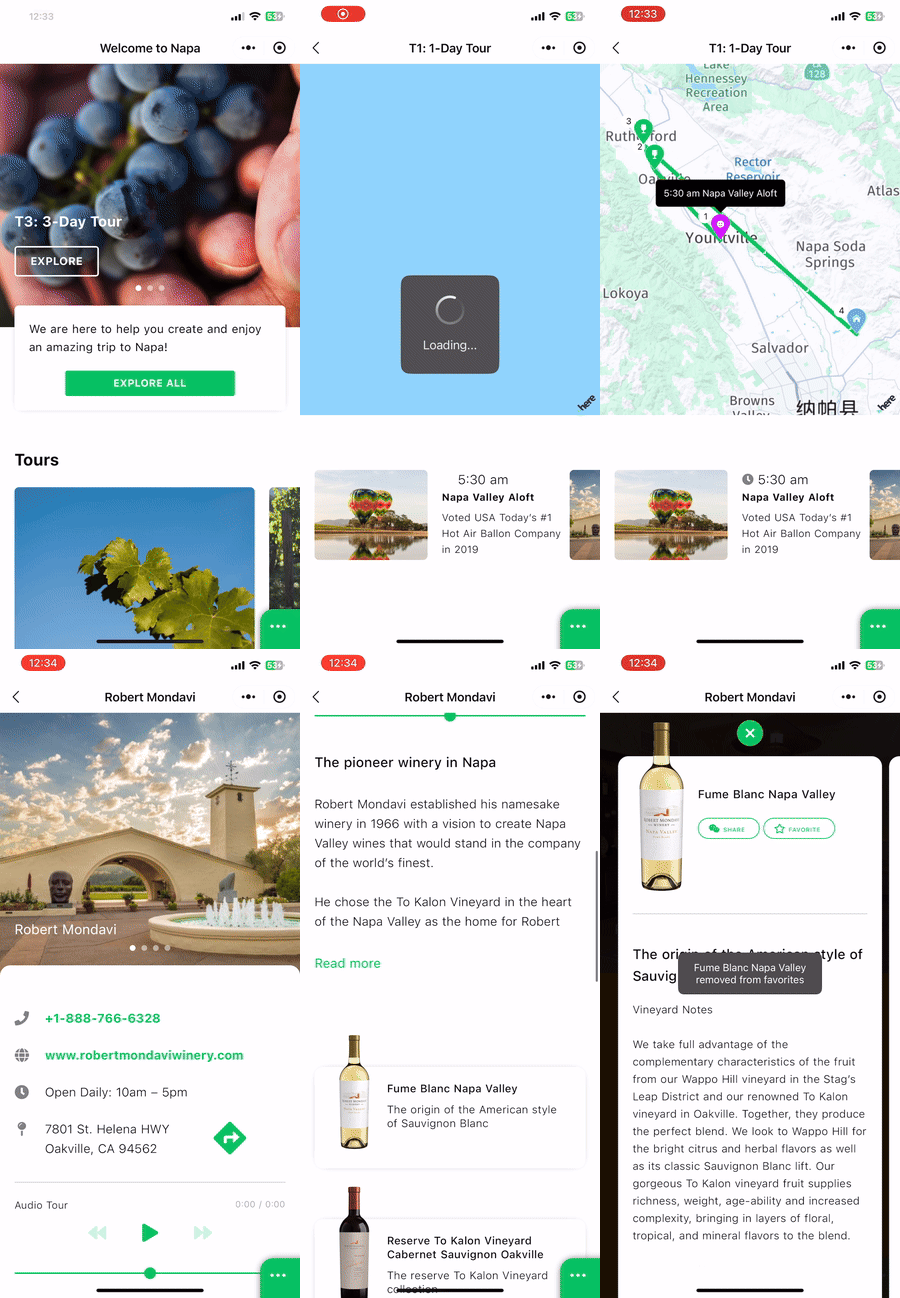
The mini‑program is the visitor’s companion: curated multi‑day tour packages, winery listings with audio tours and wine catalogues, hotels, attractions, a map‑based explorer, favourites, and native WeChat sharing. Every screen was designed from a blank canvas to feel at home inside WeChat’s visual language.
The dashboard is the operator’s control room: all tours, wineries, hotels, and attractions managed from a single place — content, media, audio tours, wine lists, and the QR codes that connect everything together.
Both halves share one source of truth. What an operator publishes in the dashboard appears immediately in the visitor’s pocket.
Key capabilities
- Curated multi‑day tour packages presented as hero experiences on the home screen, framing the trip before the visitor has set foot in the valley.
- Rich winery profiles with photography, audio tours, wine catalogues, opening hours, contact, and one‑tap navigation — all in the visitor’s own language.
- Per‑wine detail pages with vineyard notes and tasting context, accessible directly from the winery a visitor is currently standing in.
- A map‑based explorer with category filters for wineries, hotels, and attractions — turning the valley into a single browsable surface.
- Favourites for places and wines, letting visitors carry the trip home as a shortlist they can revisit, share, and act on later.
- A comprehensive admin dashboard that gives operators full control over every tour, winery, hotel, attraction, wine, and media asset in the system.
The on‑site bridge
The hinge the entire product turns on: a unique WeChat QR code at every winery.
Each winery in the system carries its own WeChat QR code, generated and managed through the dashboard. A visitor in the tasting room scans the code and lands directly on that winery’s page inside the mini‑program — wines, audio tour, story, contact — in their own language, without typing a word.
That single gesture — paper to pocket, English to Chinese, anonymous to engaged — is what closes the loop between the trip planned at home and the visit happening now.
Outcomes
- Napa Valley arrived natively inside WeChat, as a single curated experience rather than a scatter of English websites a Chinese visitor would never find.
- The on‑site QR mechanism turned tasting‑room visits into structured engagement, giving wineries a direct channel to an audience that had previously walked in and out anonymously.
- Operators gained a single place to run the catalogue — tours, wineries, hotels, attractions, wines, audio, and QR codes — instead of coordinating across disconnected tools.
- A platform live and in continuous operation since 2019, built end‑to‑end and still serving visitors today.