The idea
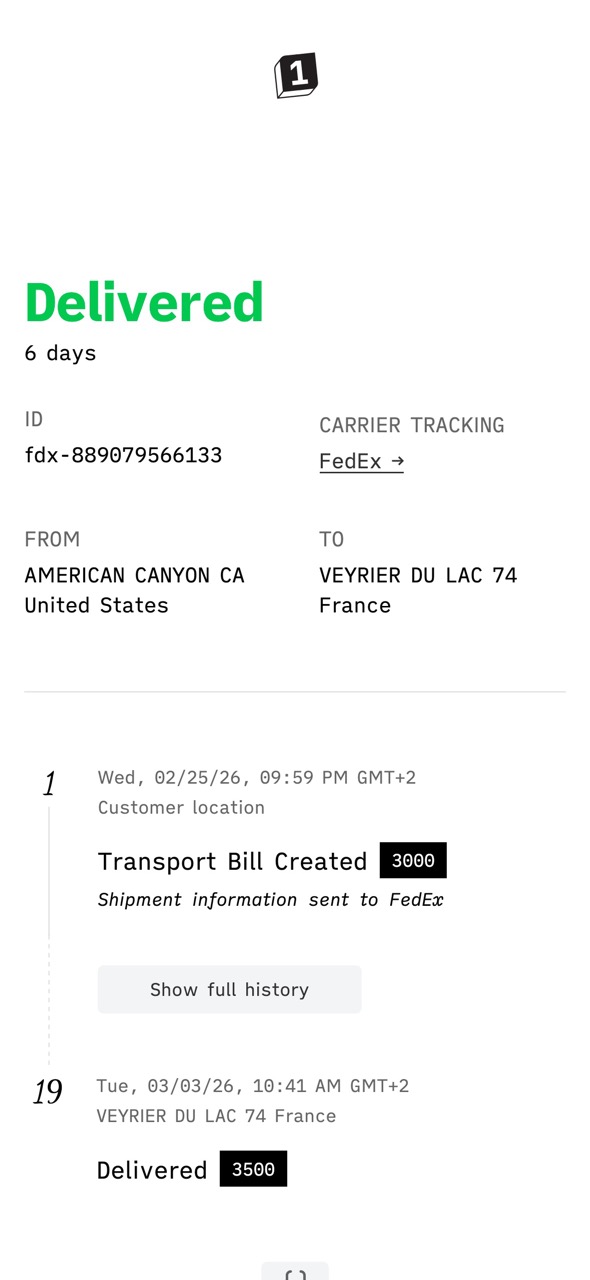
Whereis is an open source product by Eagle1 Systems designed to make cross-carrier shipment tracking simple for developers and clear for end users.
In its early stages, Whereis has two connected parts. Whereis API standardizes logistics data from multiple carriers into a single response model. Whereis UI presents that model as an elegant, readable tracking experience.
The result is a cleaner way to work with a problem that is usually messy: every carrier has different payloads, different naming, and different event semantics. Whereis makes that complexity feel predictable.
Resources
The challenge
Carrier APIs are fragmented by design.
Developers integrating shipment tracking usually have to normalize different response formats, different status vocabularies, and different data quality rules for each provider. Even simple questions like “where is this package now?” often require carrier-specific logic.
Whereis tackles that by enforcing one predictable shape:
- A consistent event timeline schema for all supported carriers.
- Standard status codes so API consumers can reason about shipment states without provider-specific branching.
- A simple tracking ID format (
operatorCode-trackingNum) that keeps requests explicit and lightweight.
At this stage, the system supports FedEx (fdx) and SF Express (sfex), with the architecture designed to expand to additional operators.
The solution
A Deno API for normalization, paired with a Fresh frontend for usability.
The backend prototype is written in TypeScript on the Deno runtime and exposes clean endpoints for both full timelines /whereis/{id} and the latest known status /status/{id}. It is designed for local Docker deployment with a minimal setup flow.
The UI is built with Fresh 2.x and Tailwind CSS, and it focuses on making logistics data readable at a glance: latest status, key route points, chronological events, and raw JSON visibility for developer trust.
Together, these two repos create a practical developer product: machine-consistent output at the API layer, human-clear output at the interface layer.
My role
Frontend contributor and owner of the user-facing tracking experience.
On this project, I own the frontend side: interface behavior, data presentation, route-level UX, and deployment flow of the Fresh app.
The UI contributor record reflects this ownership directly, with my work centered on translating normalized logistics data into a product that feels immediate and understandable under real conditions.
This is exactly the layer where design and engineering meet: keeping the product technically precise without making users think like backend systems.